Treated by Dr. P. Prakash at Dr P Prakash
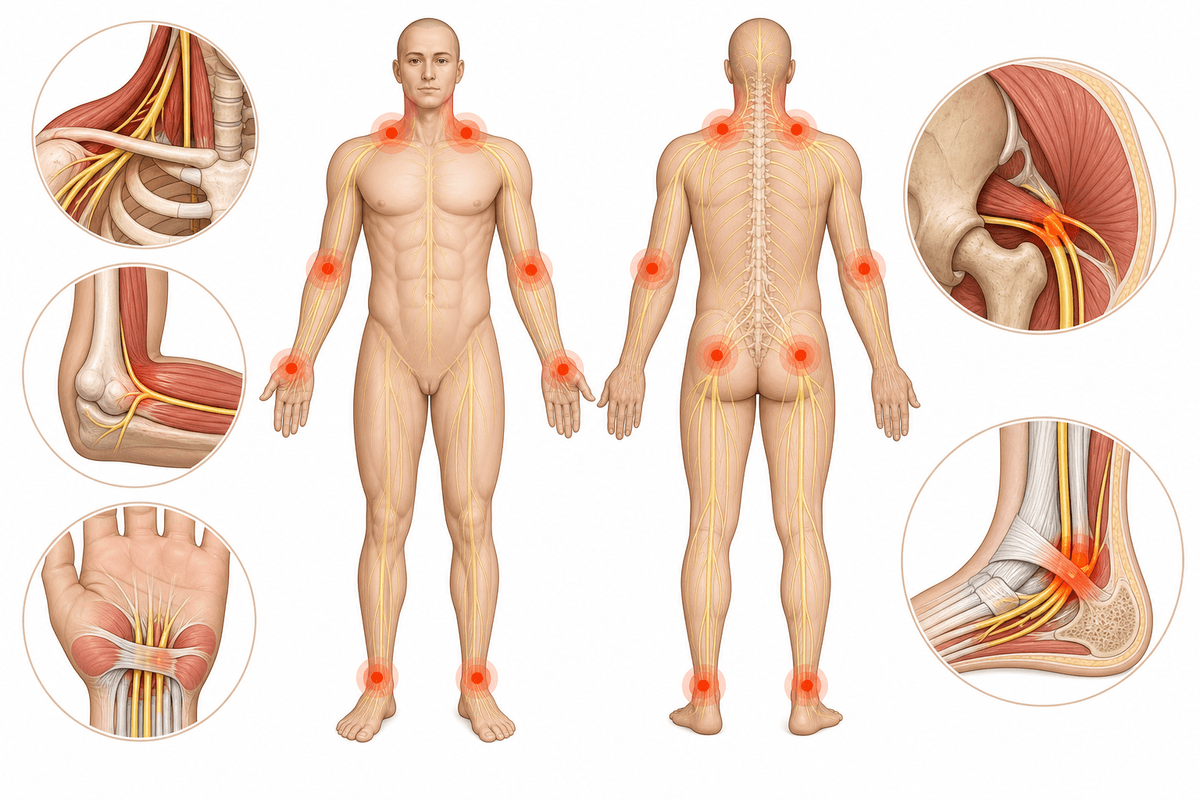
Compressive neuropathies in Hyderabad are conditions where peripheral nerves become compressed or entrapped, leading to pain, numbness, and functional impairment. These conditions commonly affect the hands, wrists, elbows, and feet, with carpal tunnel syndrome being the most prevalent form. Dr P. Prakash offers specialized surgical and non-surgical management for all types of nerve compression disorders.
Compression of the median nerve at the wrist causing numbness, tingling, and weakness in the thumb, index, and middle fingers. Most common compressive neuropathy affecting daily hand function.
Ulnar nerve compression at the elbow resulting in numbness of the ring and little fingers, hand weakness, and difficulty with fine motor tasks. Second most common upper extremity nerve compression.
Compression of the posterior tibial nerve in the ankle causing burning pain, tingling, and numbness in the sole of the foot. Often associated with prolonged standing or foot deformities.
Multiple factors can contribute to the development and progression of this condition.
Compressive Neuropathies develops gradually. Recognising symptoms early gives you more treatment options.
From conservative to surgical — we always start with the least invasive option first.
A structured, patient-first approach from first visit to full recovery.
Dr P. Prakash conducts detailed neurological examination including sensory testing, motor strength assessment, and provocative maneuvers like Tinel's and Phalen's signs to identify the exact site and severity of nerve compression.
Nerve conduction velocity studies and electromyography are performed to objectively quantify the degree of nerve damage, localize the compression site precisely, and differentiate from other neurological conditions requiring different management.
Based on severity, duration of symptoms, electrodiagnostic findings, and patient functional demands, Dr P. Prakash develops an individualized treatment protocol ranging from conservative therapy to microsurgical nerve decompression with appropriate surgical technique selection.
Dr P. Prakash performs precise nerve decompression using microsurgical techniques, ensuring complete release of all compressing structures while preserving nerve vascularity and implementing structured postoperative rehabilitation protocols for optimal functional recovery.
What to expect at each phase of recovery.
First 2 weeks involve wound healing with protective splinting, pain management, and gentle range of motion exercises. Sutures are typically removed at 10-14 days with progressive reduction in dressing requirements.
Weeks 2-8 focus on structured hand therapy including nerve gliding exercises, progressive strengthening, and desensitization techniques. Gradual return to light activities with continued protection from heavy gripping or repetitive stress.
Months 2-6 involve continued nerve regeneration with progressive improvement in sensation and strength. Most patients achieve maximum medical improvement by 6-12 months with full return to occupational and recreational activities.
85-95% of patients experience significant improvement or complete resolution of pain, numbness, and tingling within 3-6 months following surgical decompression, with earlier relief of nocturnal symptoms.
Most patients regain normal or near-normal hand function with improved grip strength, dexterity, and ability to perform fine motor tasks. Recovery of motor function depends on pre-operative muscle atrophy severity.
Sensory recovery occurs gradually over 6-12 months as nerve regeneration progresses. Patients with mild to moderate compression typically achieve complete sensory restoration, while those with severe chronic compression may have residual deficits.
Timely surgical intervention prevents irreversible nerve damage, permanent muscle atrophy, and chronic neuropathic pain. Early treatment significantly improves prognosis and reduces risk of requiring complex reconstructive procedures.
Untreated compressive neuropathies lead to progressive and potentially irreversible nerve damage with permanent muscle atrophy, chronic neuropathic pain, and significant functional disability. Prolonged compression causes axonal degeneration and fibrosis, making surgical outcomes less predictable. Severe cases may result in complete loss of sensation, permanent weakness, and inability to perform basic daily activities, ultimately requiring complex reconstructive procedures with limited recovery potential.
Seek immediate consultation if you experience persistent numbness, tingling, or weakness lasting more than 2-3 weeks, especially if symptoms interfere with sleep or daily activities. Early evaluation is crucial if you notice muscle wasting, dropping objects frequently, or progressive loss of sensation. Dr P. Prakash recommends prompt assessment for anyone with symptoms not responding to conservative measures within 6-8 weeks, as early intervention significantly improves surgical outcomes and prevents permanent nerve damage.
Early treatment means more options and better outcomes. Book a consultation to understand your condition and explore the right path forward.