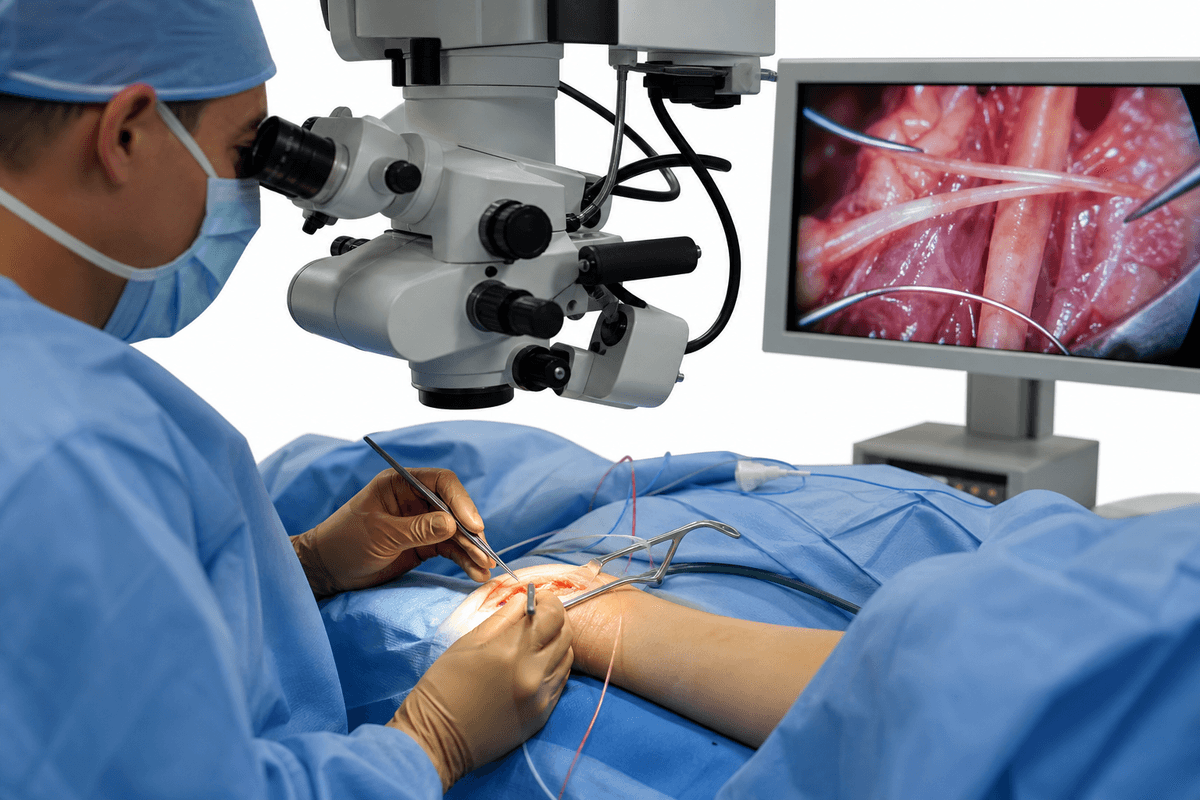
Performed by Dr. P. Prakash at Dr P Prakash
Peripheral Nerve Surgery in Hyderabad addresses nerve injuries and compression that cause pain, numbness, or loss of function in the limbs. This microsurgical procedure repairs damaged nerves through techniques like nerve grafting, decompression, or nerve transfers to restore sensation and movement. Dr P Prakash specializes in advanced peripheral nerve reconstruction with precision microsurgical techniques.
We believe in honest, upfront disclosure so you can make an informed decision.
A step-by-step look at what happens during this procedure.
Detailed nerve conduction studies, electromyography, and imaging like MRI or ultrasound identify the exact location and extent of nerve damage to plan the surgical approach.
Under general or regional anaesthesia, a precise incision is made to access the damaged nerve while preserving surrounding tissues and blood supply.
Depending on the injury, the surgeon performs direct nerve repair (neurorrhaphy), nerve grafting using donor nerves, or nerve transfer connecting a functioning nerve to the damaged pathway.
Using high-magnification microscopes and specialized micro-instruments, individual nerve fascicles are meticulously aligned and sutured to optimize regeneration potential.
The surgical site is carefully closed in layers, and the limb is positioned or splinted to protect the repair and prevent tension on the reconstructed nerve during initial healing.
A structured, patient-first approach from first consultation to full recovery.
Dr P Prakash conducts thorough clinical examination combined with advanced electrodiagnostic testing to determine nerve viability and optimal surgical timing for best outcomes.
Utilizing state-of-the-art microsurgical equipment and advanced nerve reconstruction methods, Dr P Prakash ensures meticulous fascicular alignment for maximum regeneration potential.
Each case receives customized treatment based on injury type, timing, patient age, and functional goals, with options including direct repair, grafting, or innovative nerve transfer techniques.
Dr P Prakash coordinates closely with specialized hand and physiotherapists to implement early protective motion and progressive strengthening programs that optimize nerve recovery and functional restoration.
What to expect at each stage of your recovery journey.
The surgical site is protected with dressings and splinting. Pain management is provided, and patients begin gentle range-of-motion exercises for unaffected joints. Wound care and monitoring for signs of infection are essential during this phase.
Sutures are removed and protective splinting is gradually reduced. Physiotherapy begins with gentle mobilization and sensory re-education exercises. Patients start light activities while avoiding strain on the repaired nerve.
Nerve regeneration occurs at approximately 1mm per day. Progressive strengthening exercises, functional training, and occupational therapy continue throughout this period. Gradual return of sensation and motor function is monitored with periodic nerve conduction studies.
Most patients experience significant recovery of sensation and motor control, with outcomes depending on injury severity, timing of repair, and patient age. Younger patients and early repairs typically achieve better results.
Chronic neuropathic pain from nerve compression or neuromas is substantially reduced or eliminated in the majority of cases, improving quality of life and reducing dependence on pain medications.
Patients regain ability to perform daily activities, work tasks, and fine motor skills as nerve innervation returns to muscles and skin, with ongoing improvement for up to 18-24 months post-surgery.
Timely nerve repair prevents permanent muscle wasting and contractures, preserving limb function and avoiding the need for secondary reconstructive procedures like tendon transfers.
Let's clear up some of the most common myths about peripheral nerve surgery.
Get a personalised assessment from an experienced specialist. Understand your options, ask your questions, and decide with confidence.