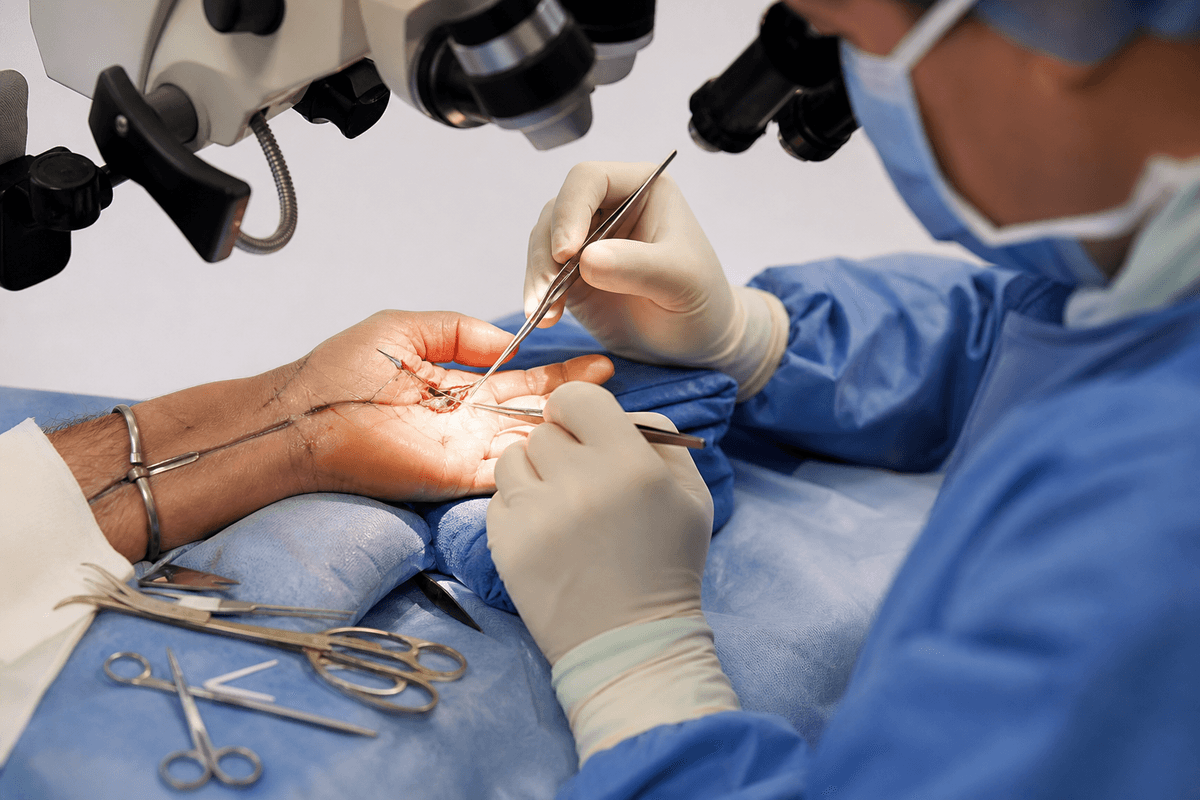
Performed by Dr. P. Prakash at Dr P Prakash
Hand Reconstruction Surgery in Hyderabad addresses complex hand injuries, congenital deformities, and functional impairments through advanced surgical techniques. This comprehensive procedure aims to restore hand function, improve aesthetics, and enhance quality of life for patients who have experienced trauma, burns, nerve damage, or developmental abnormalities. Dr P Prakash specializes in delivering personalized hand reconstruction solutions with precision and expertise.
We believe in honest, upfront disclosure so you can make an informed decision.
A step-by-step look at what happens during this procedure.
Comprehensive evaluation of hand anatomy, injury extent, and functional deficits through physical examination and advanced imaging including X-rays, CT scans, or MRI to develop a customized surgical plan.
Detailed planning identifies which structures require repair or reconstruction including bones, tendons, nerves, blood vessels, and soft tissues, with consideration for potential grafts or flaps needed.
Damaged tissues are meticulously repaired using microsurgical techniques, which may involve tendon transfers, nerve grafts, bone fixation with plates or screws, and vascular repairs to restore blood flow.
If significant tissue loss has occurred, skin grafts or local/distant flaps are used to provide adequate soft tissue coverage, protecting underlying structures and promoting healing.
The procedure concludes with precise alignment and stabilization of reconstructed elements, followed by closure and immobilization with splints or casts to support healing while maintaining optimal positioning.
A structured, patient-first approach from first consultation to full recovery.
Dr P Prakash conducts thorough evaluations to understand each patient's unique injury pattern, functional goals, and expectations, creating individualized surgical strategies that prioritize both function and aesthetics.
Utilizing state-of-the-art microsurgical equipment and techniques, Dr P Prakash performs delicate repairs of nerves, blood vessels, and tendons with precision, maximizing the potential for functional recovery.
Detailed follow-up protocols ensure proper healing, with close monitoring for complications and coordinated hand therapy programs that optimize strength, mobility, and sensory recovery throughout rehabilitation.
Dr P Prakash collaborates with hand therapists, physiotherapists, and occupational therapists to provide holistic care that addresses physical, functional, and psychological aspects of recovery for optimal outcomes.
What to expect at each stage of your recovery journey.
The first 2-3 weeks involve wound care, pain management, elevation to reduce swelling, and immobilization with splints or casts. Patients must keep the hand clean and dry while attending regular follow-up appointments to monitor healing progress.
From weeks 3-12, structured hand therapy begins with gentle range-of-motion exercises, progressive strengthening, and sensory re-education. This critical phase requires dedication to therapy protocols to prevent stiffness and maximize functional recovery.
Months 3-12 focus on advanced strengthening, fine motor skill development, and returning to daily activities and work. Continued therapy and home exercises help patients achieve maximum functional independence and adapt to any permanent changes in hand capabilities.
Most patients experience significant restoration of grip strength, pinch ability, and dexterity, enabling them to perform essential daily activities such as writing, eating, dressing, and working with greater ease and independence.
Reconstruction addresses visible deformities and scarring, improving the cosmetic appearance of the hand through careful soft tissue management and surgical refinement, which positively impacts self-confidence and social interactions.
Surgical correction of damaged nerves, unstable joints, and malpositioned bones typically results in substantial pain relief, allowing patients to use their hands comfortably without chronic discomfort interfering with activities.
By restoring hand function and appearance, patients regain independence in self-care, return to meaningful work and hobbies, and experience improved psychological well-being through renewed confidence and capabilities.
Let's clear up some of the most common myths about hand reconstruction surgery.
Get a personalised assessment from an experienced specialist. Understand your options, ask your questions, and decide with confidence.