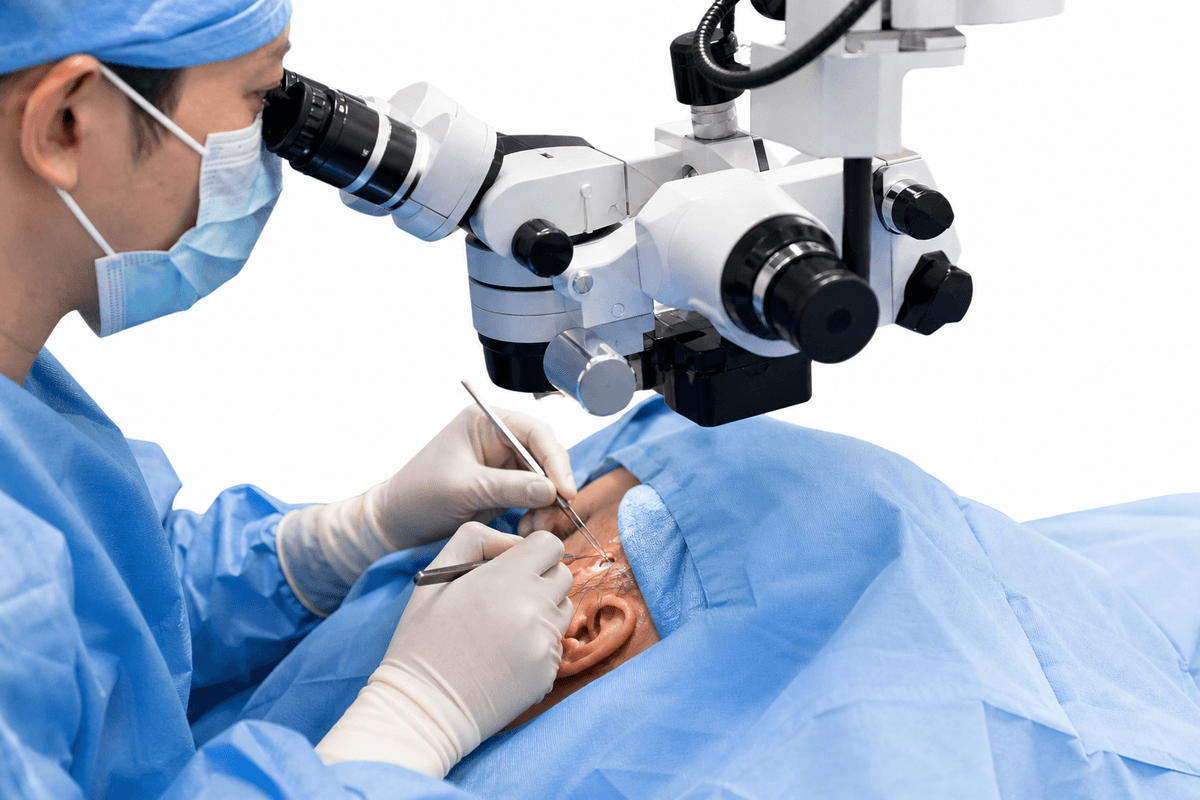
Performed by Dr. P. Prakash at Dr P Prakash
Facial Nerve Reconstruction in Hyderabad is a specialized microsurgical procedure designed to restore facial movement and function in patients who have experienced facial paralysis due to trauma, tumor removal, or congenital conditions. This complex surgery involves repairing or grafting damaged facial nerves to re-establish neural pathways, enabling patients to regain natural facial expressions, smile, and eye closure. Dr P Prakash offers advanced facial nerve reconstruction techniques with personalized care tailored to each patient's unique condition.
We believe in honest, upfront disclosure so you can make an informed decision.
A step-by-step look at what happens during this procedure.
Comprehensive evaluation including electromyography, nerve conduction studies, and high-resolution imaging to map nerve damage extent and determine optimal reconstruction approach.
Based on injury type, the surgeon chooses between direct nerve repair, cable nerve grafting using sural nerve from leg, cross-facial nerve grafting, or nerve transfer techniques.
Under high magnification, damaged nerve segments are carefully trimmed and aligned, or healthy nerve grafts are harvested and sutured to bridge gaps using microscopic sutures.
The nerve ends are meticulously coapted under tension-free conditions to facilitate axonal regeneration and restore electrical conductivity along the facial nerve branches.
The surgical site is carefully closed in layers, and protective dressings are applied while ensuring no pressure on reconstructed nerve pathways to optimize healing.
A structured, patient-first approach from first consultation to full recovery.
Dr P Prakash conducts thorough pre-operative nerve mapping and uses advanced imaging to create a customized reconstruction strategy based on each patient's specific nerve damage pattern and facial anatomy.
Utilizing state-of-the-art microsurgical instruments and intraoperative nerve monitoring, Dr P Prakash ensures precise nerve alignment and optimal conditions for regeneration with minimal tissue trauma.
Dr P Prakash provides detailed rehabilitation protocols including facial physiotherapy guidance, regular nerve function assessments, and close monitoring throughout the recovery process to maximize functional outcomes.
Dr P Prakash maintains extended follow-up care to track nerve regeneration progress, address any complications early, and perform adjunctive procedures if needed to refine facial symmetry and movement.
What to expect at each stage of your recovery journey.
First 2 weeks involve wound healing, swelling management, and pain control. Patients keep the surgical site clean and dry, avoid strenuous activities, and attend initial follow-up appointments for suture removal and wound assessment.
Weeks 3-12 focus on protecting the nerve reconstruction while initial healing occurs. Patients begin gentle facial exercises as directed, maintain nutritional support for nerve healing, and undergo periodic nerve conduction studies to monitor progress.
Months 3-18 involve active facial physiotherapy, neuromuscular retraining exercises, and progressive improvement in facial function. Patients work closely with physical therapists specializing in facial rehabilitation to optimize movement patterns and prevent synkinesis.
Patients regain the ability to smile, raise eyebrows, and create natural facial expressions, significantly improving quality of life and social interactions with gradual return of voluntary muscle control.
Restoration of orbicularis oculi function enables proper eye closure, protecting the cornea from dryness and injury, and eliminating the need for constant artificial tear application or tarsorrhaphy.
Progressive nerve regeneration leads to balanced facial appearance at rest and during expressions, reducing visible asymmetry and improving aesthetic outcomes that boost patient confidence.
Reinnervation of perioral muscles improves lip closure, reduces drooling, enhances articulation during speech, and restores normal eating and drinking abilities without embarrassing spillage.
Let's clear up some of the most common myths about facial nerve reconstruction.
Get a personalised assessment from an experienced specialist. Understand your options, ask your questions, and decide with confidence.