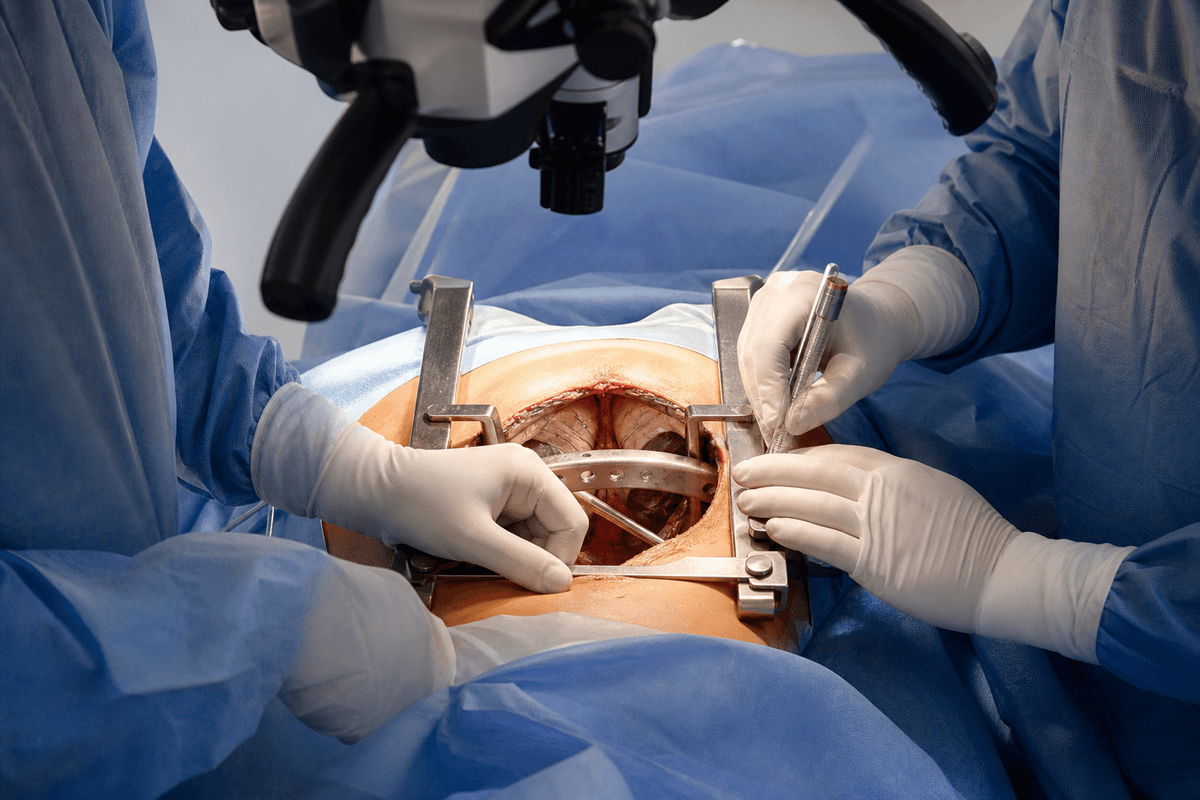
Performed by Dr. P. Prakash at Dr P Prakash
Pectus Excavatum Reconstruction in Hyderabad is a specialized surgical procedure to correct sunken chest deformities, improving both cosmetic appearance and cardiopulmonary function. This condition, where the sternum and ribs grow abnormally inward, can cause physical discomfort and psychological distress. Dr P Prakash offers expert plastic surgery solutions for pectus excavatum using modern techniques tailored to each patient's needs.
We believe in honest, upfront disclosure so you can make an informed decision.
A step-by-step look at what happens during this procedure.
Comprehensive evaluation including CT imaging to measure the Haller index and assess chest wall anatomy. Cardiac and pulmonary function tests determine the extent of physiological impairment and surgical planning requirements.
Small lateral chest incisions are made on both sides of the chest wall. The approach may be minimally invasive (Nuss procedure) or open reconstruction depending on severity and patient anatomy.
The sternum is carefully elevated and repositioned. In minimally invasive techniques, a curved metal bar is inserted beneath the sternum to push it outward. Open procedures may involve cartilage resection and sternal osteotomy.
For Nuss procedure, one or more curved metal bars are positioned and secured to the ribs with stabilizers to maintain proper chest wall position. The bars remain in place for 2-3 years to allow permanent chest remodeling.
Surgical incisions are closed in layers with absorbable sutures. Chest drains may be placed temporarily to prevent fluid accumulation. Patients are monitored closely for respiratory function and pain management in the initial recovery period.
A structured, patient-first approach from first consultation to full recovery.
Dr P Prakash conducts thorough consultations including detailed imaging analysis and functional assessments. Each surgical approach is customized based on the patient's age, severity of deformity, anatomical variations, and personal goals to ensure optimal outcomes.
Utilizing both minimally invasive Nuss procedure and modified Ravitch techniques, Dr P Prakash selects the most appropriate method for each patient. State-of-the-art equipment and precise surgical execution minimize complications while maximizing cosmetic and functional results.
A multimodal pain control protocol including epidural analgesia, nerve blocks, and scheduled medications ensures patient comfort throughout recovery. Dr P Prakash's approach focuses on minimizing discomfort while promoting early mobilization and faster healing.
Regular monitoring through clinical examinations and imaging ensures proper healing and bar position. Dr P Prakash provides ongoing support throughout the 2-3 year bar retention period and coordinates bar removal when chest wall remodeling is complete, ensuring lasting correction.
What to expect at each stage of your recovery journey.
Hospital stay of 5-7 days with close monitoring of respiratory function and pain management. Chest drains are typically removed within 2-3 days. Patients begin gentle breathing exercises and gradual mobilization under supervision to prevent complications.
First 6-8 weeks require activity restrictions including no heavy lifting, contact sports, or strenuous exercise. Pain gradually decreases with prescribed medications. Follow-up visits monitor healing and bar position through clinical examination and chest X-rays.
Gradual return to full activities over 3-6 months as chest wall adapts to new position. The metal bar remains in place for 2-3 years to ensure permanent remodeling. Patients undergo periodic imaging and clinical assessments until bar removal, after which full unrestricted activity is permitted.
Patients achieve significant cosmetic improvement with normalized chest appearance. The sternum is elevated to a natural position, eliminating the sunken appearance and creating a more symmetrical, aesthetically pleasing chest contour that boosts self-confidence.
Correction of the deformity relieves pressure on the heart and lungs, leading to improved breathing capacity, better exercise tolerance, and reduced chest pain. Many patients report increased stamina and reduced shortness of breath during physical activities.
Elimination of chest wall deformity significantly improves body image, self-esteem, and quality of life. Patients experience reduced anxiety about appearance, increased willingness to participate in social and physical activities, and enhanced overall psychological health.
Modern surgical techniques provide permanent correction with minimal recurrence rates. Once the chest wall remodels around the bar over 2-3 years and the bar is removed, the corrected chest position remains stable throughout the patient's lifetime with excellent long-term satisfaction.
Let's clear up some of the most common myths about pectus excavatum reconstruction.
Get a personalised assessment from an experienced specialist. Understand your options, ask your questions, and decide with confidence.